He liked walking the crooked streets. He grew up with a steady diet of theology. His spare time was spent studying his own discord. Kierkegaard often dreamt, both when awake and asleep, of leaving behind his gloom. He wanted to wash away the melancholy like so much dust from the streets, but it was so palpable and comfortable, he viewed it as his true mistress. He would not leave her as she would not leave him.
“I see it all perfectly; there are two possible situations- one can either do this or that. My opinion and my friendly advice is this: do it or do not do it – you will regret both.”
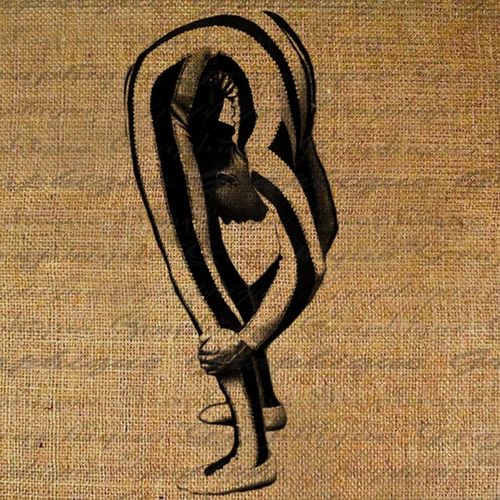
Amidst the patched canvas tents, each wagon was a world unto itself, of scents and colors and textures, indicative of those who dwelled within. In one such wooden world, the contortionist stretched out on the old rug on the floor. He in turn lifted each leg and twisted his body from the middle, swiveling side to side, and then straightening out again. He liked being twisted up best, feeling something, anything, pulling him in another direction.
“Face the facts of being what you are, for that is what changes what you are.”
Kierkegaard turned the corner to the park. He approached the arch but before he could walk underneath, he was distracted by a bird flying to a nearby tree. He must have been stood there in place longer than he imagined, daydreaming about the vagaries of avian flight and instinct, when he heard a sweet sound: his name being called. He looked and saw her standing near the bird’s tree. He walked to her, taking her hand and kissing her fingers softly through her glove. Would she ever know the depth of his feelings for her? How could he explain how much importance he placed in finishing the thought of the bird’s instinct of flight? Would she understand that love was not enough in terms of happiness and that she must move on if she had any such hopes for herself?
“Life can only be understood backwards; but it must be lived forwards.”
As he finished the fastenings of his costume, he glanced at the portrait atop the trunk. She had been captured by the photographer as an ethereal angel, her hair wisping about her like a halo, her eyes sparkling, laughing. He would never be able to look at her or even an image of her without feeling a pang of… well, it wasn’t anger or sadness or resignation. What was it? Hunger. And not just a physical hunger, but a longing for home and comfort and acceptance. He had felt that with her. He thought his home was with her, wherever they were. Then he cruelly was awakened from his dream and learned that it had been an illusion. Love had not been enough.
“Most men pursue pleasure with such breathless haste that they hurry past it.”
As Kierkegaard walked home in the gathering night, he could feel the dampness on his collar from her tears. Could still hear her heartbreak in her cries and pleas. His only lament was that the contentment offered and taken for granted by so many would never be his to enjoy. He was to carry his burdens alone. He was fit to share of himself if not physically, then with ideas. This was his connection to the living, as well as a balm to himself. He had left her with some sadness, but he knew it was not the lasting depression he would carry. He actually felt a strange lightness with each step he took. He thought of her happiness and freedom. He had felt selfish tethering her to his world of despair. Now she was free. And maybe he could be as well.
“To dare is to lose one’s footing momentarily. Not to dare is to lose oneself.”
Her picture reminded him of when the spangles were shiny, the signs smelled of wet paint, and his own outlook was new. With time, the costumes grew tattered. The signs weathered. He saw behind the glitter to the grime of the show. He sat and watched some young trapeze artists practicing and wondered at their incessant energy. He noticed the young men strutting through their rehearsal for the benefit of some young girls who were watching and giggling nearby. He didn’t think he had ever been that young and silly. Then of course he thought of her. Of the stupid tricks he had tried to impress her. It worked awhile. Had he gotten complacent? Taken her for granted? He shook off the thoughts that would have him contorted in his own head, as he had a hard time untwisting his thoughts.
“How absurd men are! They never use the liberties they have; they demand those they do not have. They have freedom of thought, they demand freedom of speech.”
She was often in his thoughts, and as their worlds were small and their society a shared space, he saw her now and again. For him, there was no other. She was to remain his ideal. He wondered at the ease of keeping her at a distance. Was he being a coward at trying not to explore his depth of feeling for her? Was it a mistake to retreat into his quest for knowledge? Was it retreating or fulfilling a destiny to dissect his philosophy? Was that then to be his fate? To question absolutely everything from every angle and at times argue with himself? Kierkegaard wrote several pieces each with its own voice and then had the voices interact. Since it seemed a crowded space between his ears, he thought that meant there was no room to let in his heart as well.
“The Absurd is to act upon faith… I must act, but reflection has closed the road so I take one of the possibilities and say: This is what I do; I cannot do otherwise because I am brought to a standstill by my powers of reflection.”
He had only a few moves left in his routine. He could barely recall the last fifteen minutes. It was all rote. He focused on his body and the wonderful feel of muscles twisting as he curled, balancing a flag on his foot while holding himself up on one arm. He could smell sawdust, popcorn. As he bent backwards, he looked at the floor and saw patterns- matted shoe-print webs of cotton candy and soda. He was reminded of how her face looked after she cried, her makeup running, following the curve of her face. She would walk out and put down roots in a town somewhere and he would continue on the road, marking seasons by new acts and costumes. He knew he’d never make it at a job that required he wear a tie and sit still. He knew he could have talked her into staying, but she deserved the home she longed for. He spun and landed on his hands, his feet dangling over his face. Through his mask he looked to the patched tent. Was that her in the shadows? Did she come back, choose their transience over establishing roots? He fluidly maneuvered his body, his thoughts now only on her. He realized in a moment that he would take her at any cost. Ignoring his speeding heart and increasing breath, he hurried and lost his timing a fraction; no one caught the music and his movement being a hair off. He knew he would find her waiting for him outside so he skipped a few steps to reach his grand finale. His hands reached for the platform. He faltered. Slipped. The colors and faces and lights and laughter and gasps swirled together as he fell.
“What wine is so sparkling, what so fragrant, what so intoxicating, as possibility!”
Kierkegaard felt his time drawing to a close. Too soon. Was he not allowed more time to explore his ideas? He had so much to share. He saw her again. They were tender, quiet moments. She could ride into her own future and he would pass into fame with death. She had helped him grow to be a man who sought and found some answers. In return, he let her go so she could flourish. His release was lightness washing over him. No more worries. Love encircling him.
The man was wrapped in some canvas and was placed in his wagon. She walked by the acrobats and clowns and trapeze artists, not meeting any eyes, but looking ahead. She walked into the still, dark room and saw his hand atop the canvas. She did not move further. Just looked at the hand. Remembered how warm it felt, and how the callouses tickled when it held her, how it cut through the air when he talked, and how it clenched when he was worried. It was open now. He was free. Maybe she could be as well.


 The Word Rummager