The Rain Stops Stopping

o-UMBRELLA-COUPLE-570
The raindrops became larger, pounding a louder staccato on the umbrella above her. She wondered if it was loud enough to drown out the sound of her heartbeat. She wondered if he could hear it as they huddled on the corner, waiting for the light to change to cross the street.

As they stood together under the umbrella, she could not quite bring herself to meet his eye. Instead, she risked a glance as high as his hand holding the umbrella just inches from her face. He had smaller hands than she imagined, yet they were dark, wiry, strong. She had the urge to find out whether his fingertips were smooth from all the typing he was doing for his thesis or they were calloused from playing guitar at the club Thursday nights.

The light changed and he placed his hand at the small of her back and they moved forward. The rain had picked up, forming rivulets along the curb and large puddles they had to step around. She pointed to the stoop of her building and they walked up the few steps to the door. They stood nervously just a moment before she quickly thanked him and withdrew her keys from her bag. She did look up then and smiled. When he smiled back, it was as though she was blinded for a moment. He leaned forward and she tilted he head a bit, expecting, hoping… He looked at her mouth, then her eyes, and then he smiled again. Asked her if she’d like to have dinner that night. She said yes and he said he’d pick her up in a few hours. He turned to leave. She walked up the steps with soggy shoes and a beaming smile.

As he walked to his apartment, he mentally kicked himself. Why didn’t he kiss her, he thought? She looked ready to be kissed. But when she smiled up at him, it was – he thought cornily- like the sun had come out. He forgot anything he had been about to say or do. Luckily, he had the wherewithal to ask her to dinner.

A few hours later, she answered the door and found him standing again, looking devastatingly handsome, at her door with his umbrella. Walk with me, he said. Where’s dinner, she asked. He cleared his throat and answered my place, if that’s alright. She said sure and as they walked, they chatted about the rain, term papers, the new sauce the local pizzeria was using, and the rain again.

A quiet descended when they got to his apartment. The rooms held the unmistakable mark of a bachelor in residence. Mismatched furniture. Posters tacked to walls. The smells coming from the kitchen were delicious. A family recipe, he said. After a companionable meal, they cleared dishes, poured wine and moved toward the sofa. She was diverted by the sound of rolling thunder. She walked to the window and he joined her there. They sipped their wine, watched the rain, listened to the thunder.

Now she was sure he could hear her heartbeat as he moved closer and placed their glasses on a shelf. Any other thoughts she had were washed away by the rain and the warmth of their touch as their lips met. Her hands found their way into his hair. His hands pulled her by the waist so close there was no space between them. Soon she felt as though they were above the clouds, looking down at the rainfall.

She felt him all around her. Pressed closely, their hearts were beating and ricocheting off their chests in an allegro tempo, with their breathing forming a lush backdrop to the rain. The symphony of sound and textures was highlighted by the dimly lit figures they made with the only an outside streetlight providing soft focus details.

She recalled her first glimpse of him across the lecture hall. In her memory it was like there had been a beacon shining on his beautiful face for an instant. Just long enough for the world to shift beneath her feet. With a burst of primal need, she predictably questioned her allure. Her closest friend from down the hall helped her in those first tentative days, with suggestions and dares and other childish tactics. It had worked. Here she was now in his arms. Watching hunger cross his features.

He didn’t notice the rain or flickering lights. Just how soft she was, how bright her eyes shined in the dim room, his own heaving breaths pushing against her. He couldn’t believe he was holding her, the girl he hadn’t even noticed until a few weeks ago at the lecture. He had seen her across the room and watched her walk down the stairs, moving like a sinuous swirl of smoke. He had been transfixed. Though instead of those jeans and t-shirt, he pictured her in a sundress with her curves highlighted. He would have to try to convince her to stop wearing jeans. And start wearing her hair down instead of pulled back all the time, too. She could be a siren if she tried just a little. Why pull all those glorious curls in a ponytail? He loved how they spilled across his pillow. What an astonishing sight. He would throw out all her hair ties to see her like this again.

That night proved to be a beginning of a whirlwind of pain and the end of the ideal. Over days and then weeks, there was a shift from the new and exciting and bright to something darker. She had thought him out of her league and he had thought her delicate, pliable. As she embraced her sensuality, he slowly groomed her to become his feminine ideal. There were subtle hints about wearing her hair differently, ditching jeans to show off her legs, adding a little makeup to “highlight” her features, reading suggested books and listening to suggested music. The scope of the shift of power in their relationship was not clear to her until she found herself one night waiting at his place at his direction.

Having spent less time with friends recently, she decided to go to a party making sure she got home before him. But soon after arriving, she felt him staring from across the room even before she saw him. He glanced away and she stood unsure before walking to him. He pulled her in for a hug, whispered menacingly in her ear and she was making excuses to leave within minutes.

She didn’t have to wait long before hearing his steps in the hall outside the apartment. There seemed to be a long pause, then he came into the room. It felt like time was holding its breath as the next couple of hours were filled with touching, kissing, pushing, crying, yelling, punching, slapping, tearing, pleading, then quiet. He had barely spoken anything intelligible. Just shared his body and his rage and his beautiful dark eyes became shuttered.

He watched her put herself back together. He watched as she gathered her things. He watched as she left. No words. No tears. It was as though they were both stunned and weren’t sure what had happened.

When she saw him days later in class, she squelched a slight ache in her heart and was able to avoid him. It took a few minutes of walking home, pondering, looking at the sidewalk, to realize it was raining. As she reached the same corner they had first shared an umbrella, she relished the feeling of the cool rain on her skin. She felt silly thinking it, but the rain was almost a cleansing for her. She felt lighter as she took off her wet shoes inside the door. Looking out the window, she saw him crossing the street towards his place. He was looking down, his hair plastered to his head. He carried his umbrella, but it remained tucked under his arm, seemingly forgotten.

A very small part of her felt for him. She knew how it felt walking away in pain but how does it feel when it lives inside you? She let the curtain close on him and the rain.

“The storm starts, when the drops start dropping
When the drops stop dropping then the storm starts stopping.”
–Dr. Seuss
Kierkegaard and the Contortionist

contort
He liked walking the crooked streets. He grew up with a steady diet of theology. His spare time was spent studying his own discord. Kierkegaard often dreamt, both when awake and asleep, of leaving behind his gloom. He wanted to wash away the melancholy like so much dust from the streets, but it was so palpable and comfortable, he viewed it as his true mistress. He would not leave her as she would not leave him.

“I see it all perfectly; there are two possible situations- one can either do this or that. My opinion and my friendly advice is this: do it or do not do it – you will regret both.”

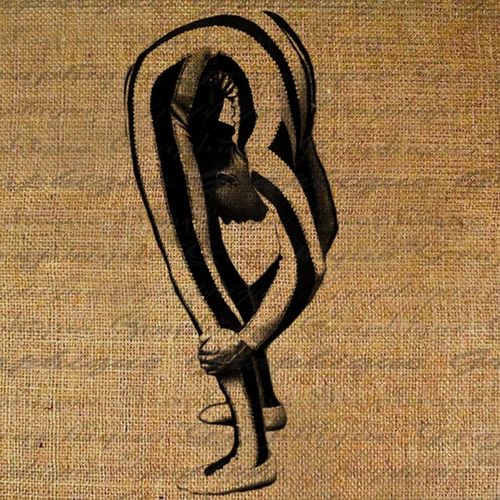
Amidst the patched canvas tents, each wagon was a world unto itself, of scents and colors and textures, indicative of those who dwelled within. In one such wooden world, the contortionist stretched out on the old rug on the floor. He in turn lifted each leg and twisted his body from the middle, swiveling side to side, and then straightening out again. He liked being twisted up best, feeling something, anything, pulling him in another direction.

“Face the facts of being what you are, for that is what changes what you are.”

Kierkegaard turned the corner to the park. He approached the arch but before he could walk underneath, he was distracted by a bird flying to a nearby tree. He must have been stood there in place longer than he imagined, daydreaming about the vagaries of avian flight and instinct, when he heard a sweet sound: his name being called. He looked and saw her standing near the bird’s tree. He walked to her, taking her hand and kissing her fingers softly through her glove. Would she ever know the depth of his feelings for her? How could he explain how much importance he placed in finishing the thought of the bird’s instinct of flight? Would she understand that love was not enough in terms of happiness and that she must move on if she had any such hopes for herself?

“Life can only be understood backwards; but it must be lived forwards.”

As he finished the fastenings of his costume, he glanced at the portrait atop the trunk. She had been captured by the photographer as an ethereal angel, her hair wisping about her like a halo, her eyes sparkling, laughing. He would never be able to look at her or even an image of her without feeling a pang of… well, it wasn’t anger or sadness or resignation. What was it? Hunger. And not just a physical hunger, but a longing for home and comfort and acceptance. He had felt that with her. He thought his home was with her, wherever they were. Then he cruelly was awakened from his dream and learned that it had been an illusion. Love had not been enough.

“Most men pursue pleasure with such breathless haste that they hurry past it.”

As Kierkegaard walked home in the gathering night, he could feel the dampness on his collar from her tears. Could still hear her heartbreak in her cries and pleas. His only lament was that the contentment offered and taken for granted by so many would never be his to enjoy. He was to carry his burdens alone. He was fit to share of himself if not physically, then with ideas. This was his connection to the living, as well as a balm to himself. He had left her with some sadness, but he knew it was not the lasting depression he would carry. He actually felt a strange lightness with each step he took. He thought of her happiness and freedom. He had felt selfish tethering her to his world of despair. Now she was free. And maybe he could be as well.

“To dare is to lose one’s footing momentarily. Not to dare is to lose oneself.”

Her picture reminded him of when the spangles were shiny, the signs smelled of wet paint, and his own outlook was new. With time, the costumes grew tattered. The signs weathered. He saw behind the glitter to the grime of the show. He sat and watched some young trapeze artists practicing and wondered at their incessant energy. He noticed the young men strutting through their rehearsal for the benefit of some young girls who were watching and giggling nearby. He didn’t think he had ever been that young and silly. Then of course he thought of her. Of the stupid tricks he had tried to impress her. It worked awhile. Had he gotten complacent? Taken her for granted? He shook off the thoughts that would have him contorted in his own head, as he had a hard time untwisting his thoughts.

“How absurd men are! They never use the liberties they have; they demand those they do not have. They have freedom of thought, they demand freedom of speech.”

She was often in his thoughts, and as their worlds were small and their society a shared space, he saw her now and again. For him, there was no other. She was to remain his ideal. He wondered at the ease of keeping her at a distance. Was he being a coward at trying not to explore his depth of feeling for her? Was it a mistake to retreat into his quest for knowledge? Was it retreating or fulfilling a destiny to dissect his philosophy? Was that then to be his fate? To question absolutely everything from every angle and at times argue with himself? Kierkegaard wrote several pieces each with its own voice and then had the voices interact. Since it seemed a crowded space between his ears, he thought that meant there was no room to let in his heart as well.

“The Absurd is to act upon faith… I must act, but reflection has closed the road so I take one of the possibilities and say: This is what I do; I cannot do otherwise because I am brought to a standstill by my powers of reflection.”

He had only a few moves left in his routine. He could barely recall the last fifteen minutes. It was all rote. He focused on his body and the wonderful feel of muscles twisting as he curled, balancing a flag on his foot while holding himself up on one arm. He could smell sawdust, popcorn. As he bent backwards, he looked at the floor and saw patterns- matted shoe-print webs of cotton candy and soda. He was reminded of how her face looked after she cried, her makeup running, following the curve of her face. She would walk out and put down roots in a town somewhere and he would continue on the road, marking seasons by new acts and costumes. He knew he’d never make it at a job that required he wear a tie and sit still. He knew he could have talked her into staying, but she deserved the home she longed for. He spun and landed on his hands, his feet dangling over his face. Through his mask he looked to the patched tent. Was that her in the shadows? Did she come back, choose their transience over establishing roots? He fluidly maneuvered his body, his thoughts now only on her. He realized in a moment that he would take her at any cost. Ignoring his speeding heart and increasing breath, he hurried and lost his timing a fraction; no one caught the music and his movement being a hair off. He knew he would find her waiting for him outside so he skipped a few steps to reach his grand finale. His hands reached for the platform. He faltered. Slipped. The colors and faces and lights and laughter and gasps swirled together as he fell.

“What wine is so sparkling, what so fragrant, what so intoxicating, as possibility!”

Kierkegaard felt his time drawing to a close. Too soon. Was he not allowed more time to explore his ideas? He had so much to share. He saw her again. They were tender, quiet moments. She could ride into her own future and he would pass into fame with death. She had helped him grow to be a man who sought and found some answers. In return, he let her go so she could flourish. His release was lightness washing over him. No more worries. Love encircling him.

The man was wrapped in some canvas and was placed in his wagon. She walked by the acrobats and clowns and trapeze artists, not meeting any eyes, but looking ahead. She walked into the still, dark room and saw his hand atop the canvas. She did not move further. Just looked at the hand. Remembered how warm it felt, and how the callouses tickled when it held her, how it cut through the air when he talked, and how it clenched when he was worried. It was open now. He was free. Maybe she could be as well.

Aloft and Adrift Over Linoleum

floor
Tendrils of light curled around my toes as I was lifted above the linoleum. Was I ill with a fever? I don’t think so. Was this a true memory or another idea planted over time to bloom when I looked back at my childhood? Not sure. But there it lingers.

Waiting to introduce the next performer in my homemade talent show, I tried to hold on to the refrigerator handle but ended up only grasping air. Pockets of panic were swallowed, making unmistakable bubbles of joy in their wake. I couldn’t breathe normally; it was like how I imagine breathing through gills would be. My body took in air as I took flight but my mouth was frozen in an open “aaahhh.” Not “argh” like a pirate, but more of a doctor asking you to say “ah.”

I digress. I probably will again.

The incandescence of that early afternoon still dwells on the tip of my memory like a morsel to be savored, rolled around in the mind until it makes sense and is palatable. It was spring, when trees shared their early greens and when flowers first peeked out of the ground. The smells of baking cookies and musty books pervaded my childhood. Mine was a theatre bedecked with scratched mirrors, cracked paint, hand-me-down clothes, crayons, dancing, and tooth fairies. There was laughter through the dust my toes kicked up under the swing. On this day, there was a smile and real wonder on my face as I floated in the kitchen.

I remember trying to blink repeatedly to even out the optical illusory effect of the floor’s pattern so my eyes wouldn’t lie to my brain about being four feet off the ground. But there was nothing for it except to accept I was hovering with my family ensconced with their feet firmly on the ground in the next room.

I could hear their happy murmuring. I wanted to fly to them but I seemed to be stuck there in mid-air with my fingertips grazing the dusty top of the fridge. I couldn’t, wouldn’t call out. I was afraid I would fall if I upset the balance by speaking and shifting the air around me. Or something like that. I was very young. I recall not wanting to come down, looking down and getting dizzy. But I realized I couldn’t stay in the air, in limbo. Nothing I needed was there. But the people in the next room didn’t miss me or come looking for me even though it felt alarmingly like I had been floating for hours (of course, in a child-like mixture of terror and curious joy, it was probably only minutes or even seconds).

I was left adrift.

Everyone had gone to the living room to watch TV while I prepared the next act. There had been laughter and joking and role-playing and singing as I emceed my show. All that faded as my family left the room and I felt myself leave the ground. As I spent a lot of time alone as a child, there were plenty flights-of-fancy to be found. So many of my stories and songs and pictures and creations littered my room, I can still recall the pride I felt when something I made was selected to be hung on the fridge. But this day burns in my memory like something real and not a dream.

Though I have always had very vivid daydreams. With castles and fairies and talking trees. My dreams have not diminished in my middle age. I just find fewer people find them endearing so I keep them mostly to myself.

I was left with my toes being kissed by sunlight streaming in the kitchen window. I landed very gently back on my feet, falling wobbly and confused but oh so happy.

“When I was a child, I had a fever. My hands felt just like two balloons. Now I’ve got that feeling once again, I can’t explain, you would not understand this is not how I am. I have become comfortably numb.” — Pink Floyd

We Have Our Orders

“Schnapps, please,” she told the bartender. She took the drink and in a precious few minutes, turned back for another. The formerly vacant seat at the bar by her was now filled with a large man. He looked like he was mostly legs. She could not see his face as he was turned away, watching a game of billiards.
“Another schnapps, please,” she ordered. The man next to her turned and looked at the bartender. “I’ll have one, too,” he said.
“With your coffee?” asked the bartender?
“Sure. Why not,” the man smiled as he turned his head slightly to look at her.
She could not help but stare at him. Not conventionally handsome, there was something oddly compelling and familiar about his face.
“The shop by the Canteen,” he said.
“Excuse me?” she asked.
“That’s where I’ve seen you,” he said. “The book shop by the bar on South Street. You like biographies, right?”
“And you like the travel section.”
He laughed, surprisingly a lighter tone than she expected and she somehow she felt lighter too.
His eyes stayed smiling even after he had stopped and he said a bit more serious in tone, “I don’t like to travel really. I’m just trying to do my homework, that’s all.”
She noticed he was at least her age and she was fast approaching 30. Homework? Her confusion must have shown on her face because when he looked at her again, his smile went from his eyes to his mouth again and he explained that he was awaiting orders to be sent overseas for work. Could be England or Switzerland or Turkey.
She said she would give a lot to be able to travel outside of her little office. Before she knew it, she was describing the trapped feeling she had been carrying around for the past year or so. How she imagined all sorts of adventures when she looked at the faces of other subway riders on the way to work in the morning. How tired she felt at the end of a long week of pretense and denial and plastering fake smiles for the rest of the world while her heart broke a little every day knowing she wasn’t living the full life she could be.
She took a deep breath. Where had all that come from? She had thought she was content. Except for some niggling feeling of anticipation that something was coming. She had started feeling it the summer before. But here, at the end of winter, with the first warm breath of spring breathing new life into the city, she thought she was content. But she realized she had been only fooling herself.
“Hello. Where did you go there?” he asked.
She had forgotten she had been pouring her strife out to him. She had forgotten herself. She sat quietly, looking at him, hoping her hopelessness was again tamped down in her face. He seemed to sense she was at a loss for something so he did the only thing he could think of.
“Dance with me,” he said. There was a bluegrass band playing some blues. It was nice. They were an odd match on the floor but they fit like laughter at a funeral.
The evening passed with schnapps and bluegrass and laughter. As the bartender was putting up the last of the clean glassware and turning out the lights, the man leaned forward on the bar stool and kissed her gently, slowly. When he sat back to look at her, he was pleased to see her open her eyes with great effort. A spell that didn’t want to be broken.
“Here’s what I want for you,” he said to her. “Do something that really makes you happy. You’re the only one stopping you.”
She laughed then. Lightly. Not wanting the spell to be broken. “I guess we all have our orders,” she said.

The Mother I’d Like to Be

threeyr
She planted jelly beans and licorice in hopes of growing her own candy-land. She read the back of cereal boxes as bed-time stories and made adventures out of nutritional information. She hung artwork framed by hula-hoops. She only drank water from the hose. Her wig was always worn askew. On purpose. She reveled in the stories of her youth, but only ones that were entirely fictional and involved unicorns and rainbows and cloud cities. Her favorite game to play with her children was leap-frog but when she played, she pretended she was a tadpole. She crafted makeup from flowers and Kool-Aid. When she was feeling a little too good, she would close her eyes, rock violently in a rocking chair for hours until she felt good and sea-sick. Her bed was a custom-made large matchbox, complete with a striker. She took a two-hour siesta every afternoon and wrote her best stories after awakening. Her house was lit by hoards of fireflies that happily supplied their light. Her children never wanted for hugs and kisses because her love for them was as boundless as her appetite for old movies and off-color jokes and brownie-filled doughnuts.

Website Powered by WordPress.com.

Up ↑