
Take It With You


Take it with you when you go, he said.
I could only nod, a million thoughts shattering my head.

The twisted words wrenched from my throat
Were forgotten when the velvet touch swept past my neck.

The air hung heavy in the deepening gloom,
Muffled sounds only from the fireflies and stars
The softest touch, almost not even there at all
But enough to carry away on a breeze.

The time seemed to linger on yet
Was too quickly gone.

Holding every word, every look, every laugh,
Now all remain as memories.

Kierkegaard and the Contortionist

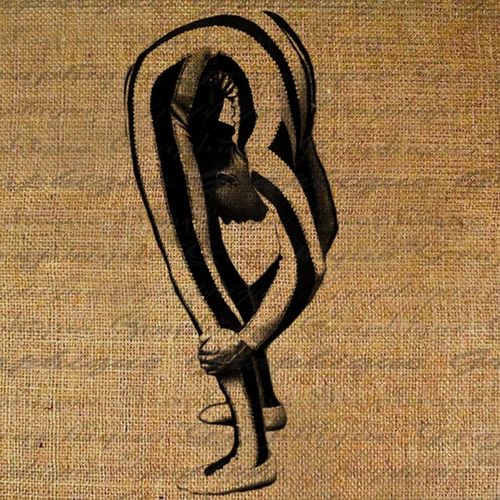
contort

He liked walking the crooked streets. He grew up with a steady diet of theology. His spare time was spent studying his own discord. Kierkegaard often dreamt, both when awake and asleep, of leaving behind his gloom. He wanted to wash away the melancholy like so much dust from the streets, but it was so palpable and comfortable, he viewed it as his true mistress. He would not leave her as she would not leave him.

“I see it all perfectly; there are two possible situations- one can either do this or that. My opinion and my friendly advice is this: do it or do not do it – you will regret both.”

Amidst the patched canvas tents, each wagon was a world unto itself, of scents and colors and textures, indicative of those who dwelled within. In one such wooden world, the contortionist stretched out on the old rug on the floor. He in turn lifted each leg and twisted his body from the middle, swiveling side to side, and then straightening out again. He liked being twisted up best, feeling something, anything, pulling him in another direction.

“Face the facts of being what you are, for that is what changes what you are.”

Kierkegaard turned the corner to the park. He approached the arch but before he could walk underneath, he was distracted by a bird flying to a nearby tree. He must have been stood there in place longer than he imagined, daydreaming about the vagaries of avian flight and instinct, when he heard a sweet sound: his name being called. He looked and saw her standing near the bird’s tree. He walked to her, taking her hand and kissing her fingers softly through her glove. Would she ever know the depth of his feelings for her? How could he explain how much importance he placed in finishing the thought of the bird’s instinct of flight? Would she understand that love was not enough in terms of happiness and that she must move on if she had any such hopes for herself?

“Life can only be understood backwards; but it must be lived forwards.”

As he finished the fastenings of his costume, he glanced at the portrait atop the trunk. She had been captured by the photographer as an ethereal angel, her hair wisping about her like a halo, her eyes sparkling, laughing. He would never be able to look at her or even an image of her without feeling a pang of… well, it wasn’t anger or sadness or resignation. What was it? Hunger. And not just a physical hunger, but a longing for home and comfort and acceptance. He had felt that with her. He thought his home was with her, wherever they were. Then he cruelly was awakened from his dream and learned that it had been an illusion. Love had not been enough.

“Most men pursue pleasure with such breathless haste that they hurry past it.”

As Kierkegaard walked home in the gathering night, he could feel the dampness on his collar from her tears. Could still hear her heartbreak in her cries and pleas. His only lament was that the contentment offered and taken for granted by so many would never be his to enjoy. He was to carry his burdens alone. He was fit to share of himself if not physically, then with ideas. This was his connection to the living, as well as a balm to himself. He had left her with some sadness, but he knew it was not the lasting depression he would carry. He actually felt a strange lightness with each step he took. He thought of her happiness and freedom. He had felt selfish tethering her to his world of despair. Now she was free. And maybe he could be as well.

“To dare is to lose one’s footing momentarily. Not to dare is to lose oneself.”

Her picture reminded him of when the spangles were shiny, the signs smelled of wet paint, and his own outlook was new. With time, the costumes grew tattered. The signs weathered. He saw behind the glitter to the grime of the show. He sat and watched some young trapeze artists practicing and wondered at their incessant energy. He noticed the young men strutting through their rehearsal for the benefit of some young girls who were watching and giggling nearby. He didn’t think he had ever been that young and silly. Then of course he thought of her. Of the stupid tricks he had tried to impress her. It worked awhile. Had he gotten complacent? Taken her for granted? He shook off the thoughts that would have him contorted in his own head, as he had a hard time untwisting his thoughts.

“How absurd men are! They never use the liberties they have; they demand those they do not have. They have freedom of thought, they demand freedom of speech.”

She was often in his thoughts, and as their worlds were small and their society a shared space, he saw her now and again. For him, there was no other. She was to remain his ideal. He wondered at the ease of keeping her at a distance. Was he being a coward at trying not to explore his depth of feeling for her? Was it a mistake to retreat into his quest for knowledge? Was it retreating or fulfilling a destiny to dissect his philosophy? Was that then to be his fate? To question absolutely everything from every angle and at times argue with himself? Kierkegaard wrote several pieces each with its own voice and then had the voices interact. Since it seemed a crowded space between his ears, he thought that meant there was no room to let in his heart as well.

“The Absurd is to act upon faith… I must act, but reflection has closed the road so I take one of the possibilities and say: This is what I do; I cannot do otherwise because I am brought to a standstill by my powers of reflection.”

He had only a few moves left in his routine. He could barely recall the last fifteen minutes. It was all rote. He focused on his body and the wonderful feel of muscles twisting as he curled, balancing a flag on his foot while holding himself up on one arm. He could smell sawdust, popcorn. As he bent backwards, he looked at the floor and saw patterns- matted shoe-print webs of cotton candy and soda. He was reminded of how her face looked after she cried, her makeup running, following the curve of her face. She would walk out and put down roots in a town somewhere and he would continue on the road, marking seasons by new acts and costumes. He knew he’d never make it at a job that required he wear a tie and sit still. He knew he could have talked her into staying, but she deserved the home she longed for. He spun and landed on his hands, his feet dangling over his face. Through his mask he looked to the patched tent. Was that her in the shadows? Did she come back, choose their transience over establishing roots? He fluidly maneuvered his body, his thoughts now only on her. He realized in a moment that he would take her at any cost. Ignoring his speeding heart and increasing breath, he hurried and lost his timing a fraction; no one caught the music and his movement being a hair off. He knew he would find her waiting for him outside so he skipped a few steps to reach his grand finale. His hands reached for the platform. He faltered. Slipped. The colors and faces and lights and laughter and gasps swirled together as he fell.

“What wine is so sparkling, what so fragrant, what so intoxicating, as possibility!”

Kierkegaard felt his time drawing to a close. Too soon. Was he not allowed more time to explore his ideas? He had so much to share. He saw her again. They were tender, quiet moments. She could ride into her own future and he would pass into fame with death. She had helped him grow to be a man who sought and found some answers. In return, he let her go so she could flourish. His release was lightness washing over him. No more worries. Love encircling him.

The man was wrapped in some canvas and was placed in his wagon. She walked by the acrobats and clowns and trapeze artists, not meeting any eyes, but looking ahead. She walked into the still, dark room and saw his hand atop the canvas. She did not move further. Just looked at the hand. Remembered how warm it felt, and how the callouses tickled when it held her, how it cut through the air when he talked, and how it clenched when he was worried. It was open now. He was free. Maybe she could be as well.
Nightmares Imprinted

She longed for the days of nightmares
Wishing she could run into her parents’ room
Be hugged and bundled
And told she was safe.

She couldn’t remember any dreams that brought light
Or any time she wasn’t scared.

Everything hurt so much
Her head spun with the memories
Stunned by finding herself years later still scared.

She couldn’t be completely certain of being awake or dreaming anymore
She had glimpsed light so bright she couldn’t stand it
She bundled herself off to hide where she found a safe place
No one would think to look right in the open
Or see through what seemed an opening
But was a dream.

Nightmares imprinted
Awoke the mind and made her sick
But then at least she wasn’t numb
And it wasn’t real if she could awake.

Dreams with light are for believers in such things
Who haven’t seen anything really ugly
Who haven’t felt the fear of wearing the ugliness like a coat
Who don’t know to welcome fear as something real
And she could walk away from something real.

Not in the Cards


A gypsy once told me I would die young. As I was in college at the time, I figured I’d never see 30, 35 tops. So whether I admit to believing in such hocus pocus, I proceeded to defile myself in all sorts of creative ways. For about a decade. And as I survived a decade of excess, I endured next a season of redemption. A decade passed in a flurry of work, home, family, and a general settling down. I’m now 42. What’s next on the other side of the rainbow?

I’m still young by certain standards, so I could go at any time. I really don’t believe in fortune tellers and such, but when someone looks at you earnestly and says something like that, it’s kind of hard to shake. You’d think maybe I’d try for something great – go out in a blaze of glory or perhaps whimper and wallow. Life has been somewhere in the middle.

I’ve wallowed in depression but then I got help. I’ve rejoiced at the great gift of my children – OK, it may not be an objective greatness, but they’re really beautiful and smart and creative and interesting people. I’ve maintained a job and a home which to me is no small feat, as I had virtually no role models other than sitcoms for happy families. There’s nothing like feeling like Leather Tuscadero living amongst the Cunninghams (and if you don’t get that reference, look it up. I’m sure it’s on some retro site. I deal in retro-references now. Maybe I am old.)

Having been brought up to abhor authority and conformity, I always thought that when you found you reached a certain age, it was inevitable you’d either give up and conform or at least be content in your discontent. I still find myself somewhere in the middle. I may be the picture of middle class on the outside but inside beats a heart that’s more in tune with Kurt Vonnegut than Danielle Steele. Jack Kerouac with a touch of Betty Crocker. The thing is, as I get older, I have less to rail against. I feel no machine working against me nor do I feel oppressed by The Man. What makes youth so paranoid anyway? Just looking for a cause to keep busy, I suppose. We must all find our own way.

So I find myself waking up in my 40’s. I don’t want to relive any dangerous excitement from my youth. I am married to a saint so I’m rocking that boat. So where’s the discontent? Can you be happy and creative? I think it’s a challenge to be comfortable and content without being complacent. Going with the flow is pretty overrated. That can be like succumbing to mediocrity.

So the challenge is to reach a point where you can enjoy where you are but look ahead with hopes of something better. Don’t stop creating, giving, living. I think that’s why people take cooking classes, go to the movies, write. It’s also why some people crack up. No outlet for their discontent.

I’m pretty sure I’m still young. I’ve got time.

Cutting Down the Tree

Cutting Down the Tree

There they were, for the third day in a row. As I drove on the country road, the elderly couple stood closely together in a field. The first time I saw them, the tree had just come down. I wasn’t sure if it had fallen in the recent storm or if they had cut it down. The way they stood, looking down at the tree’s debris that first day was a picture that stuck with me the rest of the day for some reason. They stood so still. His arms hung limply at his sides. She stood, arms hugging her middle. They both wore hats, shielding their faces but like a Van Gogh portrait, they just looked utterly dejected to me.

I drove past that day and hadn’t realized how curious I was until I saw them the next afternoon. They were in the field again, working together to cut the tree into manageable pieces. I was driving slowly behind an Amish buggy so I had plenty of time to view their work. The woman was thinner than I had thought from my brief glimpse the day before. She had her sleeves rolled up, baring thin, wiry arms. She was holding a large section of the tree while the man worked a saw. He had his flannel shirt tucked neatly in faded work pants. He was thin and bent over and not just from his work but by his age.

They did not speak. Just worked together in tandem. As I watched, I saw the woman take a tissue from her pocket. She wiped her eyes and quickly looked down at the tree again. The man took her hand and held it a moment. Then they went back to their task. And I drove past again. Curious.

The third day I saw them, all the wood had been cut and piled on a trailer. The man was raking and cleaning the area where the large tree had stood. The woman was bent over something. As there were not many cars around, I slowed down and saw she had a small tree bound in burlap that she was cutting open. When I glanced at the man, he had picked up a shovel and was digging further back in the field. So they were replacing their tree. I wonder what had brought the woman to tears. Had their tree held some sentimen for them?

Some neighbors where I grew up had planted a tree for each of their children. They took pictures every year to mark the growth of their children and the trees. A friend of mine planted a tree when her mother died and had placed a memorial plaque at its base. Could the old couple have memories such as these wrapped up in that tree?

I never thought to have any answers as it was just a passing curiosity but fate has a funny way sometimes of enlightening when you least expect it. Within a few days of seeing this couple, I noticed the phone company working on running new wire and placing a new pole near where the old tree had been. So it looked as if that tree had to be cut down after all.

A month or so later, I opened the local newspaper. As I glanced through pictures and headlines, something caught my eye: “Not Just a Tree.” Because I had trees on my mind, at least one in particular, I read the article written by a woman named Ruth. By the end, I was wiping tears. Here is what I read:

“Chet and I planted the maple when our daughter was born and the oak when our son was born. We placed the trees at each front corner of our property, as our children were to be the cornerstones of our lives. We had prayed for healthy children and the Lord granted us happy, healthy, hard-working kids that we were constantly proud of. Each spring, we took a picture of the kids by their trees, marveling at the growth of all concerned. In some pictures, when they were very young, you can see how proud they were of each inch they had grown. They stood so tall, maybe even on tip-toe to look taller. In later pictures, they looked less enthused. Especially our boy who in one shot has his head cocked to the side with a smirk that just screams ‘Aw, Ma, stop with the pictures already!’

Our Maggie did well in school, getting high marks in math and science. She became a veterinarian and now lives a little over an hour away. We are grateful she chose to live close enough so we can see our three grandchildren often. Our Greg was a wonderful baseball player. He did well in art and English in school and wrote poetry, which the girls always seemed to like. He went with one girl in particular and they would have gotten married, actually planned on it after graduation, except the war came up.

Greg finished one year at college and then ended up going to serve our country. We were proud but nervous of course, as thousands of others had been as they watched their sons and daughters leave to go to another country to fight someone else’s war. But we prayed for his safe deliverance and were delighted each time we got a letter from him and terrified each time we got a phone call at odd times of the day. As time passed, I found I could hardly stand it for the waiting for some news. Until it came and it was news that I thought would break me. Greg died over there. He had been moving some things out of a school when the bomb went off and killed him and two friends. All the children had been evacuated so he would have been glad of that.

But Chet and I were broken. He became even quieter than ever and I became busier than ever. We kept up with our work and our lives but it’s funny, I can’t remember much from that time for about a year or so. The summer after Greg passed, Maggie decided to have a memorial in Greg’s honor. We had a picnic as a celebration of his life. We set up tables and chairs and horseshoes and enjoyed a lovely day, very close to his tree. For months afterward, I would sit under that tree and talk to Greg. I never liked going to the cemetery. It was a nice spot but I didn’t feel him there. I somehow felt him with his tree. I could hear his laugh as the wind blew through the branches. I could feel his strength when I touched the trunk. It was a connection.

Recently, Greg’s tree had to be cut down to make room for ‘progress.’ Chet and I did it ourselves. We have prepared some logs to be given to family members and friends to use as yule logs, stuffed with herbs and remembrance. We salvaged some pieces and made picture frames. Some of the pieces that couldn’t be used were ground up and we used it as mulch for our new tree. Another oak. We planted it not just in memory of Greg, but as a sign of hope. Maybe someone who lives in our home someday will sit under its branches and hear the laughing of a sweet boy or the poetry of a brave young man.”

I find myself driving that stretch of road even when it is not convenient. Just to get a glimpse of Ruth and Chet. And their oak. I also find that I notice trees more. In parks, at people’s homes, along roadsides. I know in my head that there are many lessons to be found in nature and by listening to people who have experienced more of life, but I was thankful in my heart to have learned from this family and their tree.

Website Powered by WordPress.com.

Up ↑